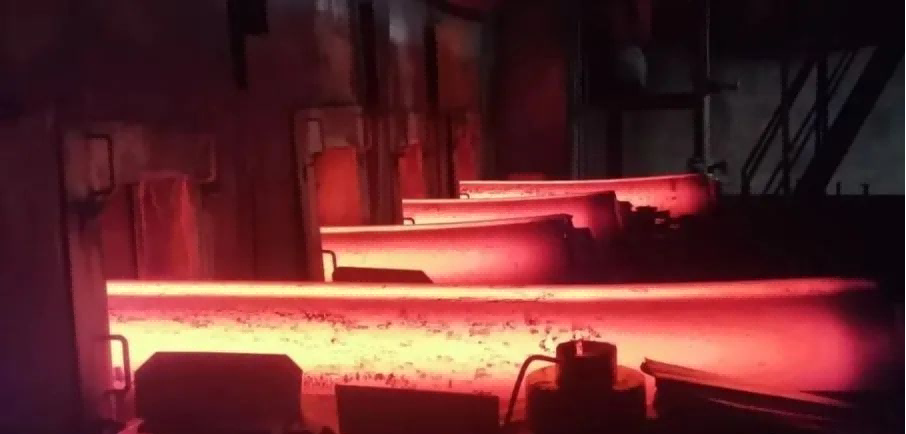
A few years ago, I visited a steel plant operating a 170 mm billet continuous casting machine with dual tundish and 10 strands.
While walking through the casting shop, one thought kept coming to mind.
The equipment itself wasn’t necessarily outdated.
But many of the operating practices looked very similar to what was common in the 1990s.
And this isn’t unique to one plant. Many casting operations around the world still carry long-standing habits that quietly affect efficiency, yield, and product quality.
Here are a few observations from that visit.
Start Casting with a Swing Trough
The caster was still using a swing trough to start casting.
Years ago, this method was widely used. Today, however, most billet casters producing rebar have moved to metered nozzles.
The operational difference can be significant.
Typical tundish life:
- Stopper-rod flow control: 15–18 hours
- Metered nozzle casting: more than 60 hours
Longer tundish life usually means better stability and smoother production scheduling.
Quartz Submerged Entry Nozzles Kept as Backup
Another thing I noticed was that the plant still kept quartz submerged entry nozzles (SEN) as emergency backup.
Most casting engineers know that quartz SENs:
- erode quickly
- have a short service life
- are usually used only in emergency situations
Keeping them on hand suggests the operation occasionally experiences unexpected process disturbances that require quick replacement.
Mold Spray Nozzle Alignment
The spray system around the mold foot rollers included 24 spray nozzles covering both faces and corners of the billet.
However, the alignment of several nozzles suggested that cooling uniformity could be improved.
In continuous casting, uneven spray distribution can easily result in:
- surface defects
- internal cracking
- unstable strand temperatures
Small mechanical adjustments can sometimes have a large impact on metallurgical results.
Billet Loss During SEN Replacement
During submerged entry nozzle replacement, about 4–6 meters of billet per strand was discarded.
Over long casting sequences, that represents a noticeable yield loss.
In many plants, billets produced during nozzle replacement are inspected and conditioned instead of being scrapped immediately, which helps improve overall yield.
Head and Tail Billet Cutting
Another potential source of hidden cost was the length of head and tail billet cutting.
During discussions with the site team, we estimated that optimizing this step alone could reduce costs by 5–8 million RMB per year.
And this improvement would require no major equipment investment—just tighter process control.
Billet Bending
The caster used a cooling bed of about 7 meters, with a bidirectional pushing system to collect and stack billets.
As a result, billet bending was quite noticeable.
What was interesting is that the downstream rolling mill seemed able to process these billets without raising major concerns.
In many rolling mills, however, excessive billet curvature can create problems for mill entry guides and rolling stability.
Surface Slag Inclusions
Some billets showed surface slag inclusions, most likely formed during nozzle replacement operations.
In practice, minor surface defects can often be removed through surface grinding, rather than scrapping the entire billet.
Secondary Cooling Performance
The secondary cooling zone showed visible temperature differences along the billet surface.
After later technical discussions, the plant optimized the secondary cooling water distribution, and billet macrostructure quality improved noticeably.
This once again highlights how critical cooling control is in continuous casting.
Final Thoughts
Continuous casting performance is rarely determined by one single factor.
Instead, it comes down to many small operational details, such as:
- start casting methods
- nozzle operation practices
- spray alignment
- cooling control
- cutting strategy
